No One Lives
From Japanese Schlockmeister, Kitamura Ryuhei
2013
This was the official website for Kitamura Ryuhei’s No One Lives, a tight, nasty genre gem from the Japanese schlockmeister.
Content is from the site's 2013 archived pages.
“As a reminder, the official synopsis is diabolical simplicity itself.
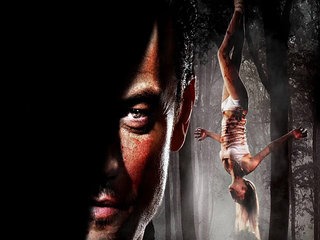
Rating: R (for strong bloody violence, disturbing images, pervasive language and some sexuality/nudity)
Genre: Horror, Mystery & Suspense
Directed By: Ryuhei Kitamura
Written By: David Lawrence Cohen
In Theaters: May 10, 2013 limited
On Disc/Streaming: Aug 20, 2013
Runtime: 86 minutes
No One Lives Trailer
~~~~~
As the webmaster for this website, I have to say this project was quite the rollercoaster. To be honest, I'm not a fan of this kind of film, and I don't plan on watching it, but a job is a job. We encountered numerous challenges along the way, starting with our hosting provider. They had to make several adjustments to accommodate our custom code, which was no small feat. Just as we were getting started, we discovered that our domain had expired because so much time had passed since it was purchased. None of my team received any notifications, so we had to scramble to recover it before the 90-day grace period ended. That was a stressful situation! Then, to add to our woes, we found out that Microsoft had stopped supporting our Access software, which is crucial for our data management. Although it still functioned, the interface with our main system was shaky, and it was clear we needed a modern solution. This meant I had to advocate for a replacement for MS Access within an organization known for its tight budgets. Despite all these hurdles, everything eventually worked out. I'm relieved that it's over, and I no longer have to review content that makes me grimace. Onward to the next project!
~~~~~
Synopsis
A ruthless criminal gang takes a young couple hostage and goes to ground in an abandoned house in the middle of nowhere. When the captive girl is killed, the tables are unexpectedly turned. The gang finds themselves outsmarted by an urbane and seasoned killer determined to ensure that no one lives.
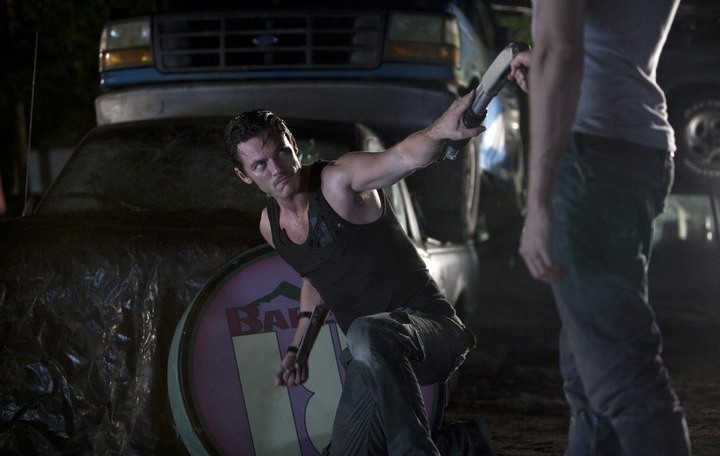
Creating a New Horror Icon
At the film’s heart is its most terrifying creation, the character of Driver, brought to twisted life by Luke Evans. “My goal with this movie was to create a new horror icon,” declares Kitamura. “That’s what Driver deserves to be. He is Hannibal Lecter meets Jason Bourne. He knows every fighting technique in the world, and has every tool at his disposal. He leaves you guessing: where did he learn all of this? We don’t even know his name, he simply is.”
But, he argues, it’s no small task. “I love watching movies like Friday the 13th or Texas Chainsaw Massacre, but it’s so hard to come up with new horror icons. Everybody’s done everything! With this, I saw a great opportunity to do it. The driving force that makes him do what he does in my film is pure love. That is what makes him such an interesting character.”
A key aspect of Driver’s character is that he makes some of the most basic horror movie tropes redundant. The hapless victims in horror films make the most ludicrous decisions that lead to their demise. With Driver, his victims are smart, but Driver will always be smarter. “You can’t beat the Driver,” Kitamura laughs. “It makes the story so unpredictable, because you never know what’s going to happen.”
Finding an actor capable of taking on the challenge of creating an iconic character – who, like Hannibal Lecter, doesn’t hide behind a mask – was a surprisingly easy decision. “Luke Evans was the first name that came up when we were trying to figure it out,” explains Kitamura.
Evans instantly responded to the challenge. “What I love about the character is he’s actually quite charming, as well as having all the other qualities of a psychopath. He’s clever. He’s methodical and clean cut. The way he goes about killing someone is well thought-out. His motivation is to get the job done properly and correctly and swiftly.”
He relished the challenge of stepping aboard the horror genre. “I find the genre difficult because I get too involved mentally and psychologically. But when it’s done well I really appreciate it, and I was intrigued to see whether I could make a horror movie.”
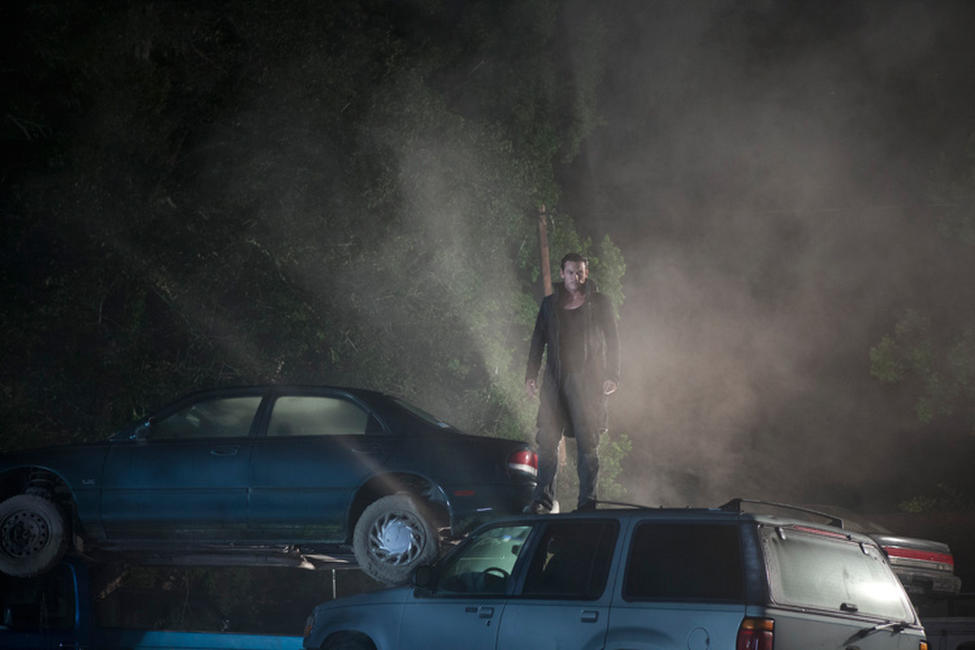
Kitamura is effusive in praising his lead actor. “I’ve worked with great actors, but Luke is the best. I don’t even have to talk with him that much about the character. The first time we met we talked about our lives – how he became an actor, how I became a director – and not a lot about the script. I knew that he got it, instantly, so what was there to talk about?”
Evans was especially attracted to the notion that Driver appears to be so normal as the film begins. “I’ve read a lot of books on psychopaths and one of the main things about psychopaths is they can immerse themselves in society. They don’t close the doors off and not speak to anyone. They have normal jobs, they have relationships. They live very simple lives but there’s nothing normal about them. In a way we’re playing it very accurately at the start of the film.”
“He’s special,” agrees Knapp. “He’s one of those gifted actors that does all the little things really, really well. The crazy part of it is that he’s only been in front of camera for a few years. It’s just fun to watch him work.”
Kitamura thinks Evans has responded well to the improvisational style of shooting. “I said to him, ‘I want to do this Apocalypse Now shot of Driver emerging out of the water,’” Kitamura remembers. The production was on location amidst the bayous of Louisiana at the height of summer, and the prospect of jumping into the water for the sake of an unscripted shot must have been rather unappealing. But Evans loved the idea. “He just did it,” Kitamura enthuses. “And it was exactly what I saw in my mind.”
It’s much easier to handle the horror on set, Evans says. Being covered in blood, as he is on numerous occasions during No One Lives, is, “actually fun… for about 70% of the time. For the other 30%, you’re exhausted, you’re tired, and things are chafing!”
Working with Kitamura has been a joy, he says. “He’s very, very easy to work with. He’s a man of few words and he only gets involved if he needs to. He’s very confident and trusting of the actors to do the job.”
Kitamura summarizes: “It’s pure fun to work with someone like Luke. There’s a reason people become superstars, and it’s very obvious that Luke Evans is on a rocket to big success.”
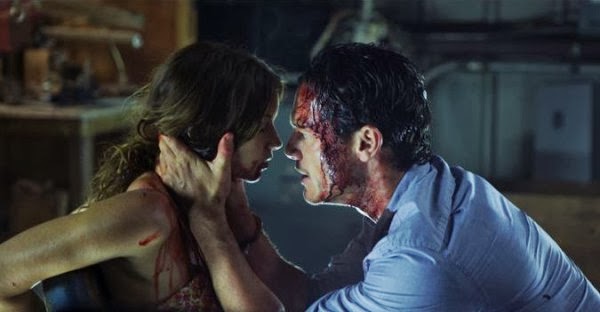
Driver and Emma
“The relationship between Driver and Emma is unique,” argues Kitamura. “Maybe Emma doesn’t fully realize it, but I think she does love Driver in a very twisted way. That’s how he manipulates her.”
For Kitamura, finding an actress who could embody Emma’s conflict was a big challenge, and the production found Adelaide Clemens just as shooting was set to start. “Adelaide is an incredibly talented and unique actress,” he says. “And she jumped on the project at the very last minute. We sent the script, and a couple of days later she was on a plane here. It was really that fast.”
“Emma is the hardened shell of a girl who was once a fiery and intelligent and optimistic,” says Clemens of her character. “I think she’s become almost animalistic and has developed these incredible survival instincts in their purest form.”
She continues: “I always approach my roles from a psychological point of view. The idea of being in solitary confinement for two years, and the person that she was before being compared to the person she is now, is what really attracted me to it. That fight for freedom was something I was really excited to explore in the extreme manner portrayed in the film.”
Clemens brought an unusual perspective to the role. “She told me she’d watched The Fifth Element,” Kitamura remembers, “And at first I thought it was strange she’d chosen that movie. But then I got it – she’s playing a character who, at the very beginning, is incredibly detached from the world. She was thinking about this character as being naive and trapped in a world she doesn’t understand.”
“Emma’s got this twisted sense of humor,” Clemens continues, “And this almost sarcastic wit. That’s what I loved when I read the script for the first time – because each character has their own voice.”
Clemens has also relished the chance to explore the strange relationship her character shares with Driver. “Their relationship is really weird,” she says. “Luke and I had our first day filming together only a week or so before we wrapped, which was really bizarre because we’ve spent months living together on location. But it almost added an extra level to it, because I had the strange feeling of knowing the character but having never acted with Luke.”
“Selling the whole Stockholm Syndrome side to the role was a challenge in and of itself,” says Knapp. “It’s sort of unexplainable and most of us can’t wrap our heads around it. Adelaide wasn’t available to read, but my casting director had a tape of an audition that she’d done with Meg Ryan and I just fell in love with her. Our casting director described her as, ‘Michelle Williams with hope!’”
Evan explains: “Driver is definitely in love with Emma. I don’t think I have any intention to kill her, she’s just mine. They’ve obviously had quite serious conversations, she’s not stupid. She’s quite a clever, intelligent, literate person, as is he, and I think they bounce off each other in a certain way.”
But Clemens qualifies her director’s statement that Emma has the same love for Driver. “I don’t think it’s love, in the ordinary sense of the word,” she declares. “I think it’s a dependency. They’ve depended on each other, and she’s been accustomed to his emotional and physical abuse. It’s become her normality for the last two years. When she reconnects with him after being in another form of captivity in the Hoag household, there’s a familiarity there, because his is the only face she’s known for the last few years.”
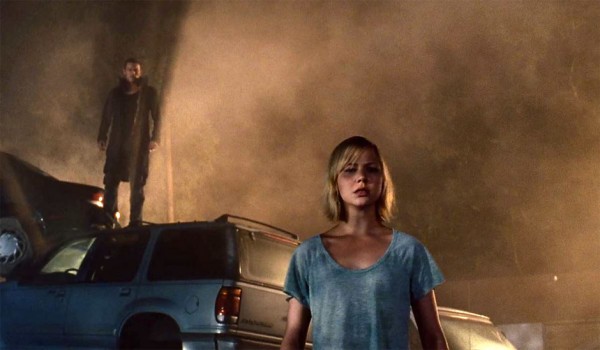
She agrees with Evans, though, that Driver’s vision of his victims is unusual. “He sees them as relationships rather than victims,” she argues. “He doesn’t realize what he’s doing, it’s just he’s in that totally sociopathic state of mind.”
Working with Evans has been a tremendous experience for Clemens. “Luke is incredibly passionate and I think he’s character-based,” she says. “He can slip into any character’s body and become that character. He’s so far from Driver – he’s such a lovely, generous and enthusiastic co-worker, and he just becomes this horribly deluded sociopath with seemingly no effort. I find it very easy to get angry with him when he becomes that!”
Knapp and Kitamura both hope that there’s more life in the relationship between Driver and Emma, and something that could be explored in an ongoing franchise geared around this iconic character. “I saw it as a franchise opportunity from the start,” Knapp says. “That’s the intention going forward and hopefully we’ll have the opportunity to do more of them. It might be a little more difficult to get Luke after The Hobbit, though!”
For his part, Evans would jump at the chance to play Driver again, but says it’ll be up to the fans to decide whether they like the character. “They’re the ones who’ll get to say if they want to see a second one or not.”
Evans took a break during the shoot to visit the fans at the San Diego Comic-Con. “They squirmed a little bit when I told them about cutting someone up and climbing inside their body,” he laughs. “They weren’t expecting something like that! Nobody has ever seen me do anything like this before, and that’s partly why I did it. That, and my grandmother loves horror films, so I want to please her too.”
Twisted Family Ties
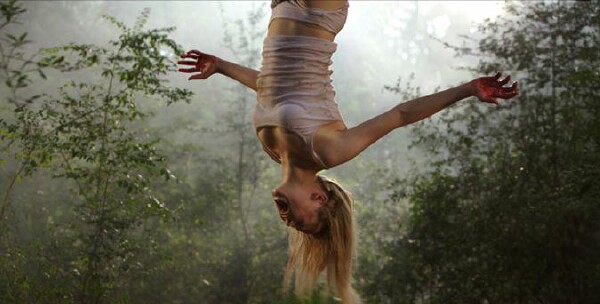
While the relationship between Driver and Emma is what the film is about, the catalyst for the events that unfold in the story is the Hoag family, a twisted bunch of redneck villains whose idea of fun is a spot of violence. Little do they know that they’ve picked on the wrong man to mess with.
Kitamura felt mainstream audiences would need some point of connection to these characters. “I’m a horror fan myself, so I know, horror fans don’t care, they just cheer every head that gets chopped off,” he laughs. “But even though this is a story of evil versus evil, if you don’t care at all it’s not that interesting. In the original script, Hoag and his gang were pure evil. They were much more heartless and I felt it was a little too typical. My main story direction was to turn Flynn into the ultimate, evil character, and to establish the others as bad people – on the wrong side of the law – but not evil.”
“One of the things we tried to avoid with this movie was any kind of cliché casting,” says Knapp. The key was to ensure each character would stand up alone. “This is one of the first films I’ve done where the arcs are really solid,” says Knapp. “The characters all go on their separate journeys and you can make a case for every character in this movie. You can argue that Flynn is the heartbeat of the movie, for example, because everything dangerous and unpredictable in the movie happens with him.”
Actor Derek Magyar, charged with bringing Flynn to life, agrees. “He’s interesting, because he’s kind of the pulse of the film. He’s a complete psychopath, with no regard for how he does things. He doesn’t care about consequences.”
For Kitamura, having Magyar understand the twisted logic of Flynn’s mind was key to establishing the character’s believability. “When I spoke with Derek, my main point was that, while everything Flynn does is evil, in the world they’re living in he believes he’s doing the right thing,” Kitamura explains. “Where you might see a mess, Flynn sees a solution. Everybody has their own justice in the film, and in their world, this is Flynn’s.”
“He’s different from Driver, because there’s a method to Driver’s madness,” says Magyar. “Flynn messes with the wrong person because he doesn’t think his actions through at all.”
Magyar has relished the challenge of discovering his character. “Flynn’s a guy I’ve been able to be incredibly free with and working together with Ryuhei and everybody to find who he really is has been so rewarding,” he says. “If I was too wild I could always bring it down and tame him a bit, but I could go as crazy as I wanted because I felt there were no boundaries for the character whatsoever. It was amazing in that sense: it’s an actor’s dream.”
Brodus Clay, the WWE superstar, is cast in the film as Ethan, the Giant. When WWE Studios came on board the project, Clay’s physical attributes seemed like an ideal fit for the part. “We had this character in the movie and it made sense to cast Brodus,” explains Knapp. “And he’s a lot of fun to have on set – he’s such a great guy.”
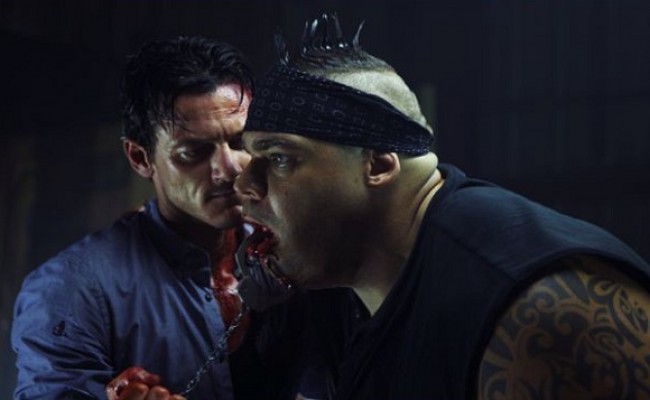
Considering the darkness of the character he plays, and the seriousness he needs to bring to his main profession of wrestling, Clay’s sense of humor has been a hit with the cast and crew. “He’s such a joy – he’s really, really witty,” says Knapp. “You’d never get that to look at him!”
Clay explains: “Ethan is Hoag’s brother, and he’s very dedicated to Hoag. He’s followed him his whole life. He doesn’t question his brother. I don’t know that he necessarily has it upstairs to be able to do that anyway. He’s not much of a thinker; he just does what he’s told.
The character’s showdown with Driver, a man who can tackle any challenger, throws Ethan for a loop. “I played it like he was just confused and shocked,” Clay explains. “Ethan’s never met anyone that could knock him off his feet before; he’s never met anyone like Driver. You see Ethan get a little bit scared and you realize he is totally thrown by Driver.”
Clay’s stoic character is soon after forced to endure the greatest indignity in the film when, postmortem, Driver uses his body as a hiding place, stepping out of it to stalk his prey.
The special effects make-up team made a double of Clay’s body – hollowed out of course – so the effect of Driver emerging from it could be shot. “It’s a bit weird to see the crew throwing your dead body around the set,” he laughs. “Some of the actors, I know, are taking it out on the body. They’re rough on him because they can’t be on me!”
Lindsey Shaw plays Amber, one of the Hoag gang’s more reluctant participants. “She’s Hoag’s daughter,” Shaw explains. “And although she’s been surrounded by these dark influences her whole life, she’s the sweet one. She doesn’t get her hands dirty despite the fact that she’s around all this nasty energy. She’s maintained this sweet, innocent quality. And then things start to get real and we realize that she is Hoag’s daughter, so she does have a few tricks up her sleeve!”
Shaw says she had trouble getting a grip on Amber’s motivations until she saw the set of her bedroom in the Hoag household. “I didn’t know whether she was this evil, manipulative thing or just honestly very sweet,” she admits. “But the way they did the room, I can’t even explain it: I just walked in and everything was answered.”
Amber has a relationship with Denny, played by Beau Knapp. “I think Denny has the most growth as a person in the film,” Knapp explains. “I hope that the audience will really care for the romance between Amber and Denny, even though they’re in a bad situation with the crowd they run with. Denny’s not that bad a guy.” Knapp and Shaw’s characters are trapped in the Hoag clan. “From the very first scenes you see Denny’s reactions to the way Flynn and the others behave,” he explains. “You can see: he didn’t sign up for this.”
Shaw argues that the Hoag clan, as dark as they may be, are motivated out of basic survival instinct. “This is their life, it’s who they are,” she explains. “They take care of each other – they’ll gun someone down if they’re talking back – but this is how they live. There’s almost a freedom from blame.”
Evans describes the Hoag clan as “the fuckwits,” an accurate approximation of Driver’s opinion of them. “He has no patience for them whatsoever,” Evans explains. “To him they’re lowly creatures, that shouldn’t really exist anyway. He cares so little about them, but he finds them quite entertaining to kill because they’re like headless chickens running around the house with no knowledge of what’s being set up for them. I think he finds the whole thing entertaining.”
Defining the Look
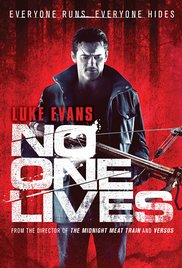
Designing a style for No One Lives, which would set it apart from the standard run of horror movies, was key to Kitamura’s approach. “The first time I met with Daniel Pearl, my DOP, I said, ‘I don’t want to repeat myself and I don’t want you to repeat yourself,’” Kitamura remembers. “We always have to do our best to come up with something that has never been done. Daniel understands that.”
Pearl is one of the masters of horror photography, since shooting the original Texas Chainsaw Massacre as his first feature project in 1974. But his skills are broader than just horror, across music videos for the likes of Michael Jackson and Madonna.
“I’ve shot everything from horror to L’Oreal commercials to Mariah Carey videos – I have a very varied career,” Pearl explains. “But I love to shoot horror films. As a cinematographer, it’s something to sink your teeth into. It’s about shadow and interesting angles.”
The movie was shot on film, rather than digital, with the Super 16 process which was employed memorably on Darren Aronofsky’s Black Swan, but is unusual for a film of this scale. “We’re at a strange point in time where, in order to save money, producers automatically think digital,” Pearl explains. “Consequently, no-one’s using Super 16 equipment. So we’ve been given a great deal to shoot totally state-of-the-art Super 16 film.”
Kitamura is thrilled by the result, Pearl explains, because the technique gives a certain look to the shots. “This one’s supposed to be gritty, and Super 16 has that certain look. It’s a shooting style that comes with these lightweight cameras. This movie doesn’t want to be 35mm anamorphic, all smooth and like a blockbuster. That grittiness works for it.”
Working with Pearl has been the realization of a dream for Kitamura. ”I’ve been honored to work with him. He’s been my teacher – I grew up studying his work,” Kitamura enthuses. “He’s like my brother and my best friend. I’m very happy to have Daniel Pearl with me. He describes our relationship as being like a dance – we’re dancing together. That’s how I feel. And it’s that way with Luke too – we’re all dancing.”
Kitamura tells a story about how this symbiosis played out on set. With 90 minutes to go on one of the shoot days, and a key shot still to get, nerves were being tested. “We had to get the shot, but we were running out of time,” Kitamura remembers. He, Pearl, Evans and the crew focused on bagging the shot, and when Kitamura next looked at his watch, after getting it in the can, he realized he still had ten minutes left. “I came up with an idea to do a crane shot. Immediately, Daniel gets it, Luke gets it, and we came up with this great shot. It’ll be one of the best moments in the film, and we got it in the last 10 minutes. That kind of moment makes me incredibly happy.”
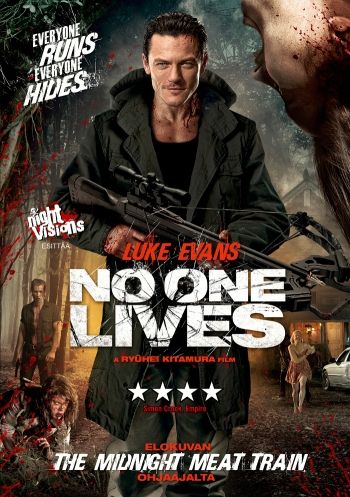
CAST
Luke Evans – Driver
An established star on London’s West End, Welsh actor Luke Evans has made an immediate impression in Hollywood most recently with starring roles in films including The Raven, Immortals and The Three Musketeers.
On December 14th, 2012, Evans will be seen as ‘Bard the Bowman’ in Peter Jackson’s The Hobbit: An Unexpected Journey, a film that moviegoers and fans worldwide are highly anticipating. Evans will also reprise his role in the sequel, The Hobbit: There and Back Again, to be released on December 2013.=
Evans will begin filming the sixth installment of Universal’s The Fast & Furious franchise, The Fast & Furious 6, this year, portraying the villain opposite Paul Walker and Dwayne Johnson, directed by Justin Lin. The film will be released on May 24th, 2013.
Evans also recently completed his second turn with director Mat Whitecross in the contemporary film noir, Ashes. Ashes co-stars Ray Winstone, Jim Sturgess, Lesley Manville and Jodie Whittaker and was written by Paul Viragh. In Fall 2010, Evans portrayed the lead role of Andy in acclaimed director Stephen Frears’ Tamara Drewe, based on the hugely successful Guardian newspaper comic strip and graphic novel by the same name. This romantic comedy, which premiered at The Cannes Film Festival, told the story of a young newspaper reporter (Gemma Arterton) who returned to the town she grew up in as her family sold her childhood home. Evans earned many fans and turned the heads of critics and journalists both stateside and internationally for his charming performance.
Prior to his film career, Evans had successfully carved out an enviable stage career starring in West End plays and musicals such as La Cava, Boy George’s Taboo, Avenue Q, Dickens Unplugged, A Girl Called Dusty, and, at the acclaimed Donmar Warehouse, Small Change and Piaf. His powerful, trained voice and engaging stage presence made him the perfect choice for leading roles such as ‘Chris’ in Miss Saigon and Roger in Rent.
Evans made his UK feature film debut in the role of Clive in Sex & Drugs & Rock & Roll, Mat Whitecross’s biopic of the London punk-rock scene founder Ian Dury of “Ian Dury and the Blockheads.” It was Warner Brothers’ action/fantasy/drama Clash of the Titans, however, that put Evans on the map, where he portrayed the charismatic god, Apollo.
After Clash of the Titans, Evans was next seen in the Ridley Scott remake of Robin Hood, playing the Sheriff’s head henchman to Russell Crowe’s interpretation of Robin Hood.
Without a doubt, Evans has solidified his place in the film world, having had his career already span a multitude of genres and a variety of substantial roles in less than three years. Evans currently lives in London.
Adelaide Clemens – Emma
Adelaide Clemens will next be seen in the BBC/ HBO miniseries “Parade’s End”, based on the novel by the same title for director Susanna White, where she plays “Valentine” opposite Benedict Cumberbatch and Rebecca Hall. She also appears in Baz Luhrmann’s The Great Gatsby, starring Leonard DiCaprio, Carey Mulligan, and Tobey Maguire.
Adelaide also has several independent films in the can including: the franchise thriller Silent Hill: Revelation in which she plays the lead role, Camilla Dickinson, where she plays the title character, and Generation Um, where she stars opposite Keanu Reeves.
Adelaide first came to prominence when she was featured as Harper in the critically acclaimed Australian series “Love My Way.” That role earned her a nomination for Most Outstanding New Talent in 2008. Adelaide’s credits include the Australian thriller, Wasted On The Young, which screened at the Toronto International Film Festival in 2010 as well as two independent films released in 2011. Vampire which screened at the Sundance Film Festival this past year and Peter Askin’s Certainty. Adelaide was also seen in X Men Origins: Wolverine, opposite Hugh Jackman and in the miniseries “The Pacific” for HBO, produced by Tom Hanks and Steven Spielberg.
Lee Turgesen – Hoag
Lee Turgesen, a graduate of the American Musical and Dramatic Academy in Manhattan, is most well-known for his leading role as Tobias Beecher in the award winning HBO drama “Oz.”
His film roles include the critically-acclaimed crime drama Monster, comedy blockbusters Wayne’s World 1 & 2, The Forgotten, Shaft, Helena from the Wedding and Point Break.
Other television credits include series regular roles on USA Network’s “Weird Science” and TNT’S “Wanted” and a recurring role on ABC’s “Desperate Housewives”. Other HBO projects include the award winning mini-series “Generation Kill” and “Bury My Heart at Wounded Knee.”
Laura Ramsey – Betty
Laura Ramsey is the personification of the Hollywood story. Fresh out of Laconia High School in Rosendale, Wisconsin, she came west to seek her fortune and was discovered while waiting tables in a Los Angeles restaurant on Sunset Blvd. Sent out on her first audition shortly thereafter, for a feature film, she landed the role. Ramsey played opposite Amanda Bynes in DreamWorks’ She’s the Man. She co-starred as Gabrielle in director Catherine Hardwicke’s film Lords of Dogtown for Sony Pictures’ Screen Gems. In addition to Lords of Dogtown, she starred in Dimension Films’ Venom, from the creator of Scream and the director of I Know What You Did Last Summer and has recently completed filming the lead role in Maverick Film’s Cruel World.
On television, she was a series regular on the ABC sitcom “The Days”. She has also starred as the lead in “The Covenant”, has guest starred on A&E’s “Mad Men” and has just finished shooting DreamWorks’ “The Ruins”.
Derek Magyar – Flynn
Award winning actor Derek Magyar has just finished a recurring role on the NBC show “The Cape”. Derek Magyar spent all of 2010 producing and directing his first feature film, Flying Lessons, with a distinguished cast that includes; Maggie Grace, Christine Lahti, Cary Elwes, Jonathan Tucker, Rick Gonzalez, Michael O’Neill, and Hal Holbrook.
Known for his leading role as X in the critically acclaimed and Indie favorite, Boy Culture, Magyar received two film festival awards for Best Actor for his outstanding performance. He also has a leading role opposite Mehcad Brooks, Katie Cassidy and Natalie Dormer in the much-anticipated Chris Carter ‘covert operation,’ Fencewalker, a dark coming of age story to be released by Fox Searchlight.
Magyar has appeared in a number guest starring and recurring roles on primetime television including a two- episode arc on NBC’s “Medium” and a major recurring role on “Star Trek” as Commander Kelby. Other past appearances have included FX’s “Dirt”, WB’s “Charmed”, Fox’s “Boston Legal”, and CBS’ “JAG”.
A graduate of Cal Arts, Magyar created Filament Theatre Company, which is based out of Los Angeles and does several productions annually. In addition to founding Filament in 2003, Derek also has a long list on roles he has done on the stage, which he says, “It’s the place where I feel the most at home, it is a feeling like no other, and being on the stage is pure freedom.” Magyar comes by his directing debut naturally as the son of film director Dezso Magyar, who was artistic director of the AFI Film Conservatory for 14 years and now holds the same position at Chapman University’s film school. Derek Magyar currently resides in Los Angeles.
Beau Knapp – Denny
Knapp made his feature film debut in the Spielberg/Abrams film Super 8. On the heels of Super 8, Knapp completed No One Lives.
America Olivo – Tamara
Shortly after graduating with her bachelor degree in Operatic Theatre from The Juilliard School in New York, America Olivo and three of her closest friends formed the harmonic music group Soluna. They signed a multi-million dollar contract with DreamWorks Records with whom they had a #1 selling single, For All Time, and a #1 dance hit, Bring It to Me, co-written by America Olivo and the members of Soluna. As a music group, Soluna’s success led them throughout the United States and Latin America opening on two major tours, one with Enrique Iglesias and the other with Marc Anthony. She performed on stages such as Radio City Music Hall, Madison Square Gardens, and has performed with such artists as Celine Dion, Mariah Carey, No Doubt, Elton John, Shakira, Nelly, Destiny’s Child, Alanis Morrisette and Stevie Wonder.
Following this musical success America Olivo landed roles on TV series such as CBS’ “How I Met Your Mother”, NBC’s “Jake in Progress”, Nickelodeon’s “The Brother’s Garcia”, UPN’s “Cuts”, a regular role on ABC’s “General Hospital” and a recurring on Fox’s “House, M.D”. Her first films were The Thirst: Blood Wars, Love Shack, and The Last Resort. She later landed a small role in Iron Man and was the lead in the largest grossing horror film of all time, Friday the 13th (2009). She also starred in Transformers 2, Bitch Slap and Neighbor.
Brodus Clay – Ethan
A former bodyguard to hip-hop legend Snoop Dogg, Brodus Clay made his way into a WWE ring in 2010, competing on the 4th season of WWE NXT. Clay’s magnetic personality, his 6 foot 7 inch 375 lb. frame and his ability to change from lovable to dangerous in the blink of an eye have made him a true WWE Superstar featured each week on the international hit television series WWE Raw. No One Lives is his feature film debut.
Lindsey Shaw – Amber
Lindsey Shaw landed her first big break on The Disney Channel’s “Ned’s Declassified School Survival Guide.” After 4 seasons on “Ned’s”, she landed a series lead in CW’s “Aliens in America” and also received rave reviews for her portrayal as Kat, opposite Larry Miller, in ABC Family’s “10 Things I Hate About You”. After filming the lead in the feature film, Smash, Lindsey returned to TV playing a recurring character on ABC Family’s “Pretty Little Liars”.

CREW
Director – Ryuhei Kitamura
Ryuhei Kitamura’s unique visual style has propelled him to international acclaim as one of the entertainment industry’s top filmmakers.
Ryuhei Kitamura grew up in Japan and went to Australia at the age of 17 to attend the School of Visual Arts in Sydney where he won the KODAK® Award for Best Director in 1988.
His first feature film, Versus – an ultra-violent action film – propelled him to international fame due to the films’ high octane, hyper-kinetic storytelling. Versus was screened at many film festivals all over the world and won an armful of awards including Best Director at Fantafestival.
The overwhelming response to Versus led to numerous opportunities and resulted in a number of sensational films and television projects in Japan thereafter including: Alive, a Sci-Fi action picture based on Tsutomu Takahashi’s graphic novel; Azumi, an epic samurai action feature with outstanding production values based on Yu Koyama’s best-selling comic, and Aragami, which won the Silver Raven Award at Brussels International Film Festival.
Kitamura created the hit Japanese TV series “Skyhigh” and directed the feature film version of “Skyhigh” as well. He was chosen to direct the high budget, effects laden 50th anniversary film featuring the world’s most famous monster in Godzilla Final Wars. His most recent Japanese film was the sexy, ultra-violent love story Lovedeath, which featured many of the biggest stars in Japan.
His range of work goes far beyond movies, making Kitamura one of today’s most versatile Japanese filmmakers. He directed Japanese rock super star Tsuyoshi Nagabuchi’s live-concert documentary, Sakurajima. Additionally, he directed all the scenes for the worldwide mega hit video game, Metal Gear Solid: The Twin Snakes. Kitamura has directed numerous commercials and music videos, as well.
In 2008, Kitamura directed his first Hollywood movie, The Midnight Meat Train, based on a novel by legendary Clive Barker for Lakeshore Entertainment and Lionsgate starring Bradley Cooper, Leslie Bibb and Vinnie Jones, which won both the Audience award and the Sci Fi Jury Award at the Gerardmer Film Festival.
In 2009, he directed his first animated film, Baton, which was written and produced by the internationally acclaimed writer/director Shunji Iwai. The film was made for the EXPO of the 150th anniversary celebration of the city of Yokohama in Japan.
Kitamura is currently working on many exciting film and television projects both in the US and in Asia.
David Lawrence Cohen – Writer
In the spring of 1991, David Cohen arrived in Hollywood from Boston, pathetically out of style and insistent on wearing a bad suit bought at Today’s Man on Rt. 17 in New Jersey to every interview. After several low level firings, David finally landed a job that required he crawl, as many have done before him, over shards of broken egos to rise to the esteemed health-benefit-less position of producer’s assistant.
From such auspicious beginnings, David went on to work on feature films in a many different capacities. As assistant to the Vice President of Physical Production at Largo Entertainment, he was actively involved in the physical production of many films, including Time Cop, Judgment Night, and The Watchmen. David transitioned this executive experience into an on-set position in the camera department of Waterworld. As the video assist operator, Dave was positioned in the midst of the action, gaining a valuable first hand education in film production.
Following Waterworld, David returned to the development world as an executive for Mike Ovitz at his AMG. In his time at the company, David brought in and developed many projects, including The Spiderwick Chronicles.
With the dissolution of AMG, David had the necessary excuse to return to what he had moved to LA to do – to write – which he and his writing partner have been successfully doing ever since. After selling numerous comedies, David’s inner horror writer was awakened. It seemed fitting that in his first solo writing endeavor, he combine his two favorite procrastinations, a love of cooking and a love of scary movies. As the culmination of several passions, Underground was born, as an elegant, yet terrifying, journey into the world of extreme cuisine, a world that David is convinced exists in back alley restaurants all over the world. Neil Marshall of The Descent is attached to direct.
Harry Knapp – Producer
Knapp has survived the film business for over 25 years. Along the way, he has produced festival favorites including Rescue Dawn, Eye of Tammy Faye, Party Monster, Jeffrey and It’s My Party. Recently Knapp’s production company Milk & Media developed and produced Ryuhei Kitamura’s No One Lives.
As the Executive In Charge of Production of World Of Wonder Productions Knapp produced over 50 hours of television and film including: 101 Rent Boys, Juror #5, Hollywood Fashion Machine, Video Killed The Radio Star, Pornography: History of Civilization, and 20-1. Prior joining World of Wonder, Knapp was a UPM/1st AD on many films including the mini-series “Oldest Living Confederate Widow Tells All” I an Executive Production Manager at Republic Pictures.
Knapp produced his first film at 21, the coming of age film The Runnin’ Kind starring Juliette Lewis.
Kami Naghdi – Producer
Kami Naghdi graduated from University College, London. He undertook post-graduate studies in law and was called to the Bar of England & Wales in the Inner Temple.
He practiced as a leading entertainment lawyer before founding his production company, Constance Media, in 2005. Since then, his producing credits have included Boogie Woogie starring Amanda Seyfried and Stellan Skarsgard, In Tranzit starring John Malkovich and Vera Farmiga, Bille August’s Goodbye Bafana (winner of the Peace Prize at the Berlin Film Festival 2007) starring Joseph Fiennes, Diane Kruger and Dennis Haysbert, Werner Herzog’s Rescue Dawn starring Christian Bale, Tom DiCillo’s Delirious starring Steve Buscemi and Michael Pitt and Incendiary with Ewan McGregor and Michelle Williams. This Beautiful Fantastic, which Naghdi developed with producing partner Matt Treadwell, was selected as one of the leading scripts in the UK and was on the 2009 Britlist.
Francois Ivernel – Executive Producer
Francois Ivernel is a graduate of the prestigious Paris business school Hautes Etudes Commerciales (HEC). He joined the Finance Department of Chargeurs in 1986. Subsequently, Chargeurs acquired Pathé and, in 1994, Ivernel began his move into film production, becoming Managing Director of Pathé Image in 1998. He was appointed Managing Director of Pathé UK in June 2000. Since then, he has led the Pathé UK team to become a sustainable and profitable company with productions and acquisitions including Girl With A Pearl Earring, Mrs. Henderson Presents, The Wind that Shakes the Barley, Volver, BAFTA & Academy Award® winning The Queen, The Duchess, Bright Star and eight time Academy Award® winning Slumdog Millionaire.
Since March 2007, Pathé’s film production and distribution operations for both France and the UK have jointly been managed by Ivernel, who is in charge of films, and Marc Lacan, who is overseeing general management. Both Ivernel and Lacan are Executive Vice Presidents of Pathé, reporting directly to Chairman Jérôme Seydoux.
Cameron McCracken –Executive Producer
Managing Director of Pathé UK, Cameron McCracken is a member of the British Screen Advisory Council and a director of Screen Yorkshire.
Prior to his appointment at Pathé 12 years ago, Cameron was Director of Business Affairs at the pre-cursor of the BFI/UK Film Council – British Screen Finance Limited – from 1997 to 2000.
Cameron read Law at Balliol College, Oxford University and worked as a film lawyer for 9 years in London, Paris and Rome before establishing himself as an independent producer.
Cameron has co-produced or executive produced over 25 films including Stephen Frears’ Academy Award® winner The Queen, Danny Boyle’s eight time Academy Award ® winner Slumdog Millionaire and most recently Academy Award® winner The Iron Lady starring Meryl Streep.
Michael J. Luisi – Executive Producer
Michael Luisi was named President of WWE Studios in September 2011. In this role, Luisi develops worldwide strategy for the Studio and oversees its operations. He also manages development, production, distribution and marketing of all film releases. Since taking the reins at WWE Studios, Luisi has sheparded numerous productions and acquisitions including No One Lives, The Day, Dead Man Down, and The Hive.
Luisi brought in WWE Studios’ first ever acquisition, The Day, which stars Dominic Monaghan, Shawn Ashmore, and Ashley Bell. This cult hit and midnight madness favourite from the Toronto International Film Festival was directed by Doug Aarniokoski and was released by Anchor Bay Films on August 29th.
WWE Studios joined with IM Global to co-produce the romantic thriller, Dead Man Down, starring Colin Farrell, Noomi Rapace and Terrence Howard. Dead Man Down was directed by Niels Arden Oplev (The Girl With The Dragon Tattoo), produced by Neal H. Moritz (Fast & Furious franchise), and will be distributed by FilmDistrict on April 5th, 2013.
WWE Studios’ most recent venture, The Hive, is a crime thriller directed by Brad Anderson (The Machinist), starring Halle Berry and Abigail Breslin. This picture is being co-produced with Troika Pictures and will be released by Sony Pictures Worldwide Acquisitions. In addition to its current productions and projects in development, WWE Studios has multi-picture production deals set up with Lionsgate Films and Twentieth Century Fox Home Entertainment.
Prior to joining WWE Studios, Luisi spent twelve years with Miramax Films, most recently as Executive Vice President, Worldwide Operations. In that position, he oversaw the day to day operations of Miramax, as well as serving as the principal business advisor to the President of Miramax and primary liaison with then parent company Disney.
Since 2004, Luisi has served as an adjunct professor in the Entertainment, Media and Technology (EMT) program at New York University Stern School of Business.
Luisi holds a Bachelor of Fine Arts degree in Film & Television from New York University Tisch School of the Arts and a Juris Doctor degree from New York University School of Law.
Elton Brand – Executive Producer
Elton is an NBA player and Film Producer.
Brand attended Duke University where he led the Blue Devils to the NCAA Championship in his sophomore year. In 1999 he was the first pick in the NBA Draft and went on to be named the Rookie of the Year. Brand is entering his 14th season with the Dallas Mavericks in 2013.
In 2006, alongside partners Steve Marlton and Harry Knapp, Brand produced his first film, the critically acclaimed Werner Herzog Vietnam film Rescue Dawn starring Christian Bale. The film premiered to rave reviews at the Toronto Film Festival.
That experience led Brand to start the media company Milk & Media with partner Harry Knapp in 2009. Together they have developed dozens of films and most recently produced No One Lives.
Brand has been a friend to independent film for the past ten years and continues to explore ways to fund film while taking care of investors.
Daniel C. Pearl, ASC – Director of Photography
Within months of receiving his Master’s degree from the University of Texas in 1973, Daniel Pearl photographed the original Texas Chainsaw Massacre, a legendary independent feature which is part of the permanent film collection of the New York Museum of Modern Art. He spent the next several years shooting low-budget fright flicks with high production values, most notably She Came to the Valley, The Stuntmen, and Invaders from Mars.
Pearl began shooting music videos during the early 1980s, initially to fill the spaces in-between narrative film projects. But his use of light and lens—exemplified in “Billie Jean” by Michael Jackson—breathed life into the music video art form. Pearl’s work quickly became the benchmark for all music videos. He won the inaugural MTV Award for Best Cinematography in 1984 for “Every Breath You Take” by The Police, and again in 1992 for “November Rain” by Guns & Roses. Pearl has earned a total of ten MTV Video Music Award nominations—most recently for “Take a Picture” by Filter in 2000. In 1996 he was the first cinematographer to receive the MVPA Lifetime Achievement Award, and in 1997 he was the first inductee into the Kodak Vision Hall of Fame for Music Video Cinematography. Most recently he was honored by the 14th CamerImage Cinematographic Festival in Lodz, Poland with their Golden Frog Award for his outstanding achievements in music video and commercial cinematography.
His contemporary work includes collaborations with Hype Williams, Andy Morahan, Paul Hunter, Marcus Nispel, F.Gary Gray and Rebecca Blake. Pearl’s easily recognizable and highly influential reel is dotted with Grammy winners and the biggest names in the music industry, including: Mariah Carey, Garth Brooks, Toni Braxton, Kanye West, Meatloaf, Lauren Hill, Aerosmith, Shania Twain, Cher, Whitney Houston, The Rolling Stones, Puff Daddy and Janet Jackson.
Having photographed over three hundred commercials, Pearl also manages to create some of the advertising industry’s best images—earning industry-wide acclaim for his work on Motorola’s “Wings” spot in 1999, which is also in the permanent collection of the New York Museum of Modern Art.
In the summer of 2002, Pearl photographed the remake of Texas Chainsaw Massacre for director Marcus Nispel, and they teamed up again in the summer of 2004 to shoot Frankenstein for the USA Network. It was around this time that he was asked to join the American Society of Cinematographers. In the summer of 2005, Pearl photographed the feature film Captivity for director Roland Joffe in Moscow and upon completion went straight to work on Pathfinder. Lately spending his time more equally split between commercials and feature films, he has recently completed photography on Alien versus Predator: Requiem, The Kings of Appletown, and Michael Bay’s Friday the 13th. Both Bay’s Texas Chainsaw Massacre and Friday the 13th were the top grossing films the week of their release.
Pearl recently completed filming Joel Silver’s The Apparition in Berlin, directed by Todd Lincoln.
Jonathan Carlson – Production Designer
Jonathan Carlson’s previous film work as Production Designer includes A Cinderella Story, The Reef, Highlander 4, Beowulf, That Darn Cat and Mortal Kombat.
His extensive television credits include ABC’s “Lost,” A&E’s “The Glades,” NBC’s “The Poseidon Adventure,” Fox’s “Past Life,” “The Curse of King Tut,” Fox’s “Brimstone” and NBC’s “Pretender.”
Claire Breaux – Costume Designer
No One Lives is the seventh film that Claire has designed for WWE Studios. Other WWE Studios films include Legendary, starring Patricia Clarkson, Danny Glover, and John Cena, Knucklehead, with Paul White, Mark Feuerstein, and Melora Hardin, That’s What I Am, starring Ed Harris and Chase Ellison, Inside Out, with Paul Levesque, Michael Rapaport, Bruce Dern, and Parker Posey, The Chaperone with Paul Levesque, Ariel Winter, and Kevin Corrigan, and Blood Brothers with John Cena, Ethan Embry, and Amy Smart.
Before working with the WWE Studios, Claire designed a range of projects from low budget shorts and student films to big budget studio films. Her credits on short films include Hole in the Paper Sky starring Jessica Biel and Garry Marshall and Grasshopper with James Franco. Low-budget feature credits include Lost Dream starring Michael Welch, Aisha Hinds, and Patricia Richardson and The Substance of Things Hoped For with Ray Wise. She also designed New Line Cinema’s $43 million 3-D feature, The Final Destination.
In addition to film work, Claire has also worked as Costume Designer on four TV movies: “Midnight Bayou” starring Faye Dunaway and Jerry O’Connell; “Tribute” with Brittany Murphy and Jason Lewis for the Lifetime TV Network; “Ricochet” starring John Corbett and Julie Benz and “Hide” with Carla Gugino, Kevin Alejandro, and Mark-Paul Gosselaar for TNT.
Toby Yates – Editor
No One Lives is Toby Yates’ second collaboration with director Ryuhei Kitamura following Midnight Meat Train.
Toby Yates’ numerous feature film credits include Bless Me Ultima, The Mulberry Tree, Blood Done Sign My Name, The Dead Girl, Slipstream and Blue Car. Yates won the Best Editing prize at the 2007 Milan Film Festival for The Moon and the Stars.
Yates’ work for television includes ABC’s “Brothers & Sisters,” “A Separate Place” and “Don Quix.”
More Background On NoOneLivesTheMovie.com
NoOneLivesTheMovie.com was the official promotional website associated with No One Lives, director Ryuhei Kitamura’s intensely violent horror-thriller starring Luke Evans and Adelaide Clemens. Released during an era when dedicated movie websites were still an important part of film marketing, the site served as an online introduction to the movie, its characters, filmmakers, production background and distinctive approach to the horror genre.
The film premiered in 2012 before receiving a limited U.S. theatrical release on May 10, 2013. It was rated R for strong bloody violence, disturbing images, pervasive language and some sexuality and nudity, with a running time of approximately 86 minutes. The surviving material from the original website identifies it explicitly as the official site and preserves extensive 2013-era promotional material about the production.
Although No One Lives was not a mainstream box-office success, the film developed an identity among horror audiences because of its unusually vicious premise, extreme practical violence, dark humor and Luke Evans’ performance as the mysterious killer known simply as Driver. The website is consequently interesting not merely as a defunct film site, but as a surviving piece of the promotional campaign for a movie designed unapologetically for genre audiences.
The Story Behind No One Lives
At first glance, No One Lives appears to set up a familiar backwoods-crime scenario. A criminal gang encounters a traveling couple, takes them hostage and retreats to an isolated location. The situation seems straightforward until the criminals discover that the man they have abducted is considerably more dangerous than they are.
The official synopsis summarized the reversal succinctly: a ruthless gang takes a couple hostage, only to discover that it has encountered an experienced killer who intends to make sure no one survives.
That reversal is central to the movie's appeal. Instead of innocent travelers struggling to escape sadistic criminals, the supposed victim becomes the dominant predator. The movie therefore turns the traditional home-invasion or kidnapping formula inside out.
Driver, played by Luke Evans, is not presented as a conventional hero arriving to punish villains. He is himself a deeply disturbed killer. The resulting conflict is closer to evil-versus-evil than good-versus-evil, deliberately depriving the audience of the comfortable moral structure found in many thrillers.
That concept also explains the title. No One Lives functions less like a description than a threat.
Ryuhei Kitamura and the Search for a New Horror Icon
Japanese director Ryuhei Kitamura was central to the film's identity. By the time he made No One Lives, Kitamura had already attracted an international following through movies characterized by aggressive visual style, kinetic action and genre experimentation.
His breakthrough Versus combined martial arts, gangsters, zombies and action filmmaking. His subsequent credits included Alive, Azumi, Aragami, Sky High and the large-scale Godzilla: Final Wars. In Hollywood, he had previously directed The Midnight Meat Train, based on Clive Barker's work.
Kitamura approached No One Lives with a particularly ambitious objective: he wanted Driver to become a recognizable horror character.
The original promotional material described Kitamura's intention to create a new horror icon, imagining Driver as a combination of the intelligence and menace of Hannibal Lecter with the extraordinary physical capabilities of an elite action hero.
That aspiration explains several unusual aspects of the character. Driver doesn't wear a mask. He doesn't lumber silently after victims. He looks polished, intelligent and socially functional. He can speak normally and behave charmingly while remaining almost impossibly dangerous.
Rather than asking whether Driver can defeat his opponents, much of the suspense comes from discovering what he has already anticipated and what elaborate punishment he has planned.
Luke Evans as Driver
Luke Evans was an especially interesting casting choice because No One Lives arrived just as his international film career was accelerating.
Evans had built a substantial theatrical career in London's West End before transitioning to movies. His early screen appearances included Clash of the Titans, Robin Hood, The Three Musketeers, Immortals and The Raven. Around the period in which No One Lives was reaching audiences, Evans was also appearing as Bard the Bowman in Peter Jackson's Hobbit films and moving into the Fast & Furious franchise.
The archived promotional material makes clear that Kitamura regarded Evans as crucial to making Driver work. Evans, in turn, was interested in the contradiction between the character's clean-cut appearance and his psychopathy.
Driver could blend into ordinary society. That normal appearance makes his behavior considerably more disturbing.
The performance consequently depends as much on composure as violence. Evans generally plays Driver as controlled and methodical while the criminals around him become increasingly frantic. The contrast gives the character much of his authority.
Adelaide Clemens and the Strange Relationship Between Emma and Driver
The movie's other important psychological component is Emma, played by Adelaide Clemens.
Emma isn't simply another captive. She has an established and deeply traumatic connection to Driver, and their relationship complicates the apparent simplicity of the movie's premise.
The filmmakers described Emma as someone psychologically transformed by prolonged captivity. Clemens approached the role in terms of survival, isolation and dependency rather than treating Emma simply as a conventional horror victim.
That relationship provides the movie with its most disturbing emotional dimension. Driver regards Emma as someone with whom he has a relationship rather than merely a victim. Emma's response to him reflects trauma, familiarity, dependence and survival instincts.
The filmmakers even discussed the possibility of continuing Driver and Emma's story. Producer Harry Knapp regarded Driver as having franchise potential, while Evans indicated that he would have been willing to return if audiences responded strongly enough.
A sequel never materialized, leaving No One Lives as Driver's sole screen appearance.
The Criminal Gang
The gang initially appears to occupy the villain role normally found in a rural horror thriller.
Lee Tergesen plays Hoag, while Derek Magyar plays Flynn, arguably the gang's most volatile member. Beau Knapp appears as Denny, Lindsey Shaw as Amber, America Olivo as Tamara and WWE performer Brodus Clay—later widely known as Tyrus—as the physically imposing Ethan.
Kitamura intentionally differentiated Driver from Flynn. Driver is controlled and methodical; Flynn is impulsive and chaotic. The contrast effectively gives the movie two different forms of psychopathy.
The supporting characters were also designed to have varying degrees of culpability rather than functioning as an indistinguishable collection of villains. The production material explains that Kitamura softened some members of the gang from the original screenplay so audiences would have at least some emotional connection to them.
That becomes important once Driver begins hunting them. The audience knows these people are criminals, yet Driver is so disproportionately dangerous that the gang gradually assumes the narrative position normally occupied by victims in a slasher film.
WWE Studios, Pathé and the Production Companies
No One Lives was developed through an unusual combination of production partners.
WWE Studios and Pathé UK announced their partnership on the project in May 2011. WWE described the arrangement as a co-financing and distribution partnership with Pathé UK, with principal photography scheduled to begin in New Orleans on June 13, 2011.
Harry Knapp and NBA player-turned-producer Elton Brand were associated with Milk & Media, while Kami Naghdi represented Constance Media. Contemporary production listings identify Milk & Media, Constance Media, Pathé UK and WWE Studios among the companies behind the movie.
The involvement of WWE Studios also explains Brodus Clay's presence. Clay was a WWE performer making his feature-film debut as Ethan.
For WWE Studios, however, No One Lives represented something more interesting than simply putting a wrestler into a starring vehicle. The movie was a comparatively specialized genre production built primarily around Kitamura and Evans rather than around WWE branding.
That helped distinguish it from several earlier WWE Studios productions.
Filming in Louisiana
Although the movie's story unfolds in deliberately isolated, almost anonymous rural surroundings, production took place in Louisiana.
Contemporary production information identifies Mandeville, Abita Springs, Covington and Hammond among the filming locations, with the Red Barn Pub in Mandeville specifically associated with the production. Principal photography began in June 2011.
The Louisiana environment worked particularly well for Kitamura's purposes. Rural roads, dense vegetation, humid landscapes and isolated structures helped create the impression of a world separated from normal society.
One piece of production material describes Kitamura spontaneously asking Evans to emerge from bayou water for an unscripted shot inspired by Apocalypse Now. Despite the unpleasant prospect of entering Louisiana water during the summer, Evans agreed, and the shot became part of the director's visual conception of Driver.
Daniel Pearl and the Film's Visual Style
One of the production's most significant creative contributors was cinematographer Daniel Pearl.
Pearl occupies an important place in horror-film history because one of his earliest features was Tobe Hooper's original 1974 The Texas Chain Saw Massacre. He later became enormously influential in music-video and commercial cinematography, shooting work associated with performers including Michael Jackson, The Police, Guns N' Roses, Madonna and many others.
Kitamura wanted No One Lives to avoid looking like a generic contemporary horror production.
The movie was shot using Super 16 film rather than simply adopting digital cinematography. Pearl believed the format's grain and texture were particularly appropriate for a movie that was supposed to feel gritty rather than polished like a conventional blockbuster.
That decision gives No One Lives an interesting visual connection to older exploitation and horror filmmaking while retaining Kitamura's energetic modern staging.
The Toronto International Film Festival Premiere
An important milestone for No One Lives came when it was selected for the 2012 Toronto International Film Festival.
The movie screened in TIFF's celebrated Midnight Madness program, an especially appropriate venue for an aggressively violent genre film. The Midnight Madness lineup that year also included films such as Dredd, The ABCs of Death, John Dies at the End, The Lords of Salem, Aftershock and Seven Psychopaths.
The selection gave No One Lives credibility and visibility among the exact audience most likely to appreciate it: horror enthusiasts accustomed to midnight screenings, outrageous violence and unconventional genre filmmaking.
It also represented a milestone for WWE Studios. WWE promoted No One Lives as its first film to debut at TIFF.
The festival premiere helped establish the movie's reputation well before its American theatrical release.
Anchor Bay and the Theatrical Release
Following its festival exposure, Anchor Bay Films acquired distribution rights.
The film ultimately received a limited U.S. theatrical release beginning May 10, 2013. It played in select markets rather than receiving the nationwide rollout associated with a major studio horror release.
The limited release explains the modest domestic theatrical revenue. Box Office Mojo reports approximately $74,918 in domestic grosses and roughly $1.05 million worldwide, with the overwhelming majority of theatrical revenue coming from international markets.
Russia/CIS was particularly significant, generating approximately $588,000 according to Box Office Mojo.
The movie subsequently moved to home entertainment, where a violent niche horror title arguably had a more natural long-term market than it did in theaters.
Reviews and Critical Reception
Critical reaction was divided and often harsh.
Rotten Tomatoes currently records a 43 percent Tomatometer score from 37 reviews. Metacritic gives the movie a score of 26 based on 14 critic reviews, categorizing its reception as generally unfavorable.
Some critics objected to the dialogue, characterization and extreme violence. Others recognized precisely the qualities that horror audiences might enjoy.
Empire, for example, rated the film considerably more positively than many American reviewers, emphasizing its energetic, film-aware and deliberately sadistic approach. British critic Mark Kermode also acknowledged Luke Evans' effectively nasty performance and the film's enthusiastic use of gore.
The discrepancy between professional and audience response is notable. Metacritic's recorded user score is substantially higher than its critic score, while later viewer commentary frequently treats the film as an entertaining B-movie rather than something requiring conventional dramatic sophistication.
That gap helps explain the movie's continued genre appeal.
Popularity and Cult Appeal
No One Lives should not be characterized as a major commercial hit. Its theatrical numbers clearly indicate otherwise.
Its importance is better understood through genre longevity.
More than a decade after its release, the movie remains available through streaming and digital rental channels, continues to accumulate viewer ratings, and appears regularly in discussions of violent thrillers, overlooked horror films and Luke Evans' darker roles.
Rotten Tomatoes records more than 2,500 audience ratings, considerably more engagement than its small theatrical gross might suggest.
Its cult appeal comes from several easily identifiable elements: an early narrative reversal, a charismatic killer, exceptionally graphic violence, practical gore effects, Kitamura's aggressive direction and the novelty of seeing Evans in an unusually vicious role.
The film also belongs to the tradition of movies whose reputations improve when separated from their initial theatrical reviews. Viewers encountering No One Lives as a streaming discovery know they are choosing an unapologetically excessive genre picture. That can produce a different response from critics evaluating it as a new theatrical release.
Awards and Recognition
No One Lives itself did not become a significant awards contender, and its legacy is not based on major industry prizes.
Its most important institutional recognition was arguably its selection for TIFF Midnight Madness. For a movie deliberately constructed as extreme genre entertainment, inclusion in one of the world's best-known festival programs for horror, action and cult cinema was meaningful recognition.
The people behind the film, however, brought substantial award credentials.
Kitamura's earlier Versus had earned festival recognition, while Aragami received the Silver Raven at the Brussels International Festival of Fantastic Film. His The Midnight Meat Train also received festival awards.
Cinematographer Daniel Pearl had an even more extensive honors history, including MTV Video Music Awards for cinematography, the Music Video Production Association Lifetime Achievement Award and recognition from Camerimage.
Editor Toby Yates had previously won Best Editing at the Milan Film Festival for The Moon and the Stars.
What Visitors Found on NoOneLivesTheMovie.com
NoOneLivesTheMovie.com functioned essentially as a digital press kit and promotional hub.
Its surviving content included the synopsis, trailer material, character and production discussions, cast biographies and extensive crew biographies. Particularly valuable were long interview-style sections explaining the filmmakers' intentions.
Visitors could learn why Kitamura wanted Driver to become a horror icon, how Evans approached playing a socially convincing psychopath, how Clemens interpreted Emma's trauma, how the criminal family was conceived and how Daniel Pearl and Kitamura developed the film's visual language.
That depth makes the archived website more informative than many modern movie landing pages.
Rather than merely displaying a poster and trailer, it preserved the creative rationale behind the production.
The Website as a Snapshot of an Earlier Movie-Marketing Era
NoOneLivesTheMovie.com is also representative of an increasingly uncommon form of internet history: the dedicated official movie website.
During the 1990s, 2000s and early 2010s, studios routinely registered standalone domains for individual films. These sites could contain trailers, photo galleries, cast biographies, downloadable wallpapers, production notes, games, press materials and release information.
Social media and centralized studio platforms gradually reduced the need for them.
Today, film campaigns are much more likely to direct audiences toward YouTube, Instagram, TikTok, Facebook or a distributor's central website. Individual promotional domains frequently expire after the theatrical and home-video marketing cycle ends.
NoOneLivesTheMovie.com therefore has value as an artifact of that transitional period.
The archived material explicitly identifies the domain as the film's official website and dates the surviving content to its 2013-era pages.
Cultural and Genre Significance
The movie's broader significance lies in the intersection of several horror traditions.
It combines rural exploitation horror with the mechanics of a slasher film, but reverses the conventional predator-and-victim relationship. It adds Kitamura's Japanese action sensibility to an American backwoods setting and photographs the result with a cinematographer whose career reaches directly back to The Texas Chain Saw Massacre.
Driver is simultaneously serial killer, action hero and slasher villain.
That hybrid identity is what separates No One Lives from a routine kidnapping thriller.
The film also reflects an era when horror increasingly circulated internationally through festivals and specialist distributors rather than depending solely on mainstream studio releases. A Japanese director, Welsh leading actor, Australian actress, British and American production partners, WWE Studios, a Louisiana shoot, a Toronto festival premiere and international theatrical distribution all contributed to a movie that was global in production even though its setting was deliberately American.
The Legacy of NoOneLivesTheMovie.com
NoOneLivesTheMovie.com ultimately documented a film with a much longer cultural life than its initial box-office performance might suggest.
No One Lives did not produce the Driver franchise its creators envisioned. It did not become a mainstream horror blockbuster, and its initial reviews were decidedly mixed. Yet the film survived the fate of many small theatrical releases because its central idea remains immediately understandable and because Kitamura committed completely to its excesses.
For Luke Evans fans, it offers an unusually dark performance from an actor who subsequently became much more widely recognized through major franchises and studio productions. For Kitamura followers, it represents another example of his fascination with hyper-stylized violence. For horror enthusiasts, it delivers a compact reversal of familiar slasher conventions.
And for those interested in internet and film-marketing history, NoOneLivesTheMovie.com preserves the remnants of the promotional campaign surrounding that unusual production.
The domain once existed to persuade audiences to discover a new horror villain.
Years later, its most interesting role is historical: documenting how No One Lives was conceived, made and presented to audiences at the moment when its creators hoped Driver might become horror cinema's next enduring monster.